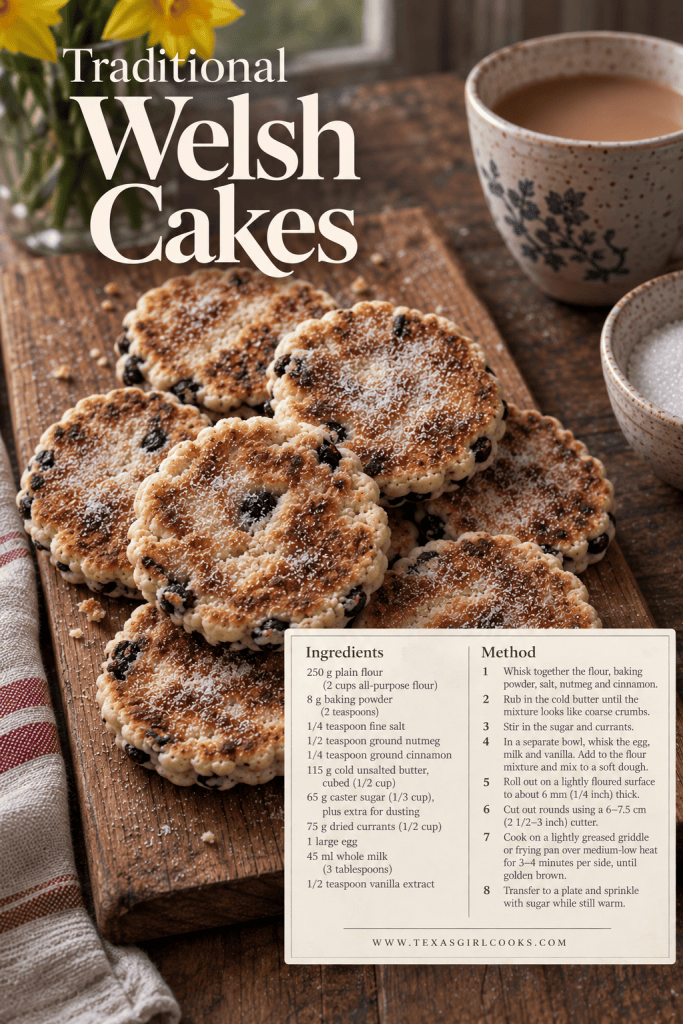
Welsh cakes are one of those simple old-fashioned treats that feel instantly cozy. These little griddle cakes are buttery and lightly sweet with warm nutmeg, a hint of cinnamon and plenty of currants throughout. They’re somewhere between a biscuit, a scone and a soft little tea cake, but with a texture all their own.
Unlike scones, traditional Welsh cakes are cooked right on a griddle or heavy frying pan instead of baked in the oven. A light sprinkle of sugar while they’re still warm is all they need. Serve them with a cup of tea for breakfast or an afternoon treat especially on a cool autumn day.
Prep Time: 15 minutes
Cook Time: 15–20 minutes
Makes: 16–18 Welsh cakes
Ingredients
- 250 g (2 cups) plain flour / all-purpose flour
- 8 g (2 teaspoons) baking powder
- 1/4 teaspoon fine salt
- 1/2 teaspoon ground nutmeg
- 1/4 teaspoon ground cinnamon
- 115 g (1/2 cup) cold unsalted butter, cubed
- 65 g (1/3 cup) caster or granulated sugar, plus extra for finishing
- 75 g (1/2 cup) dried currants
- 1 large egg
- 45 ml (3 tablespoons) whole milk, plus a little more if needed
- 1/2 teaspoon vanilla extract
Instructions
- In a large mixing bowl, whisk together the flour, baking powder, salt, nutmeg and cinnamon.
- Add the cold butter and rub it into the flour mixture with your fingertips until the mixture resembles coarse breadcrumbs.
- Stir in the sugar and dried currants.
- In a small bowl, whisk together the egg, milk and vanilla. Add it to the flour mixture and gently mix until a soft dough forms. If the mixture is too dry to come together, add additional milk about 5 ml (1 teaspoon) at a time. The dough should be soft but not wet or sticky.
- Turn the dough onto a lightly floured surface and gently bring it together. Roll it to approximately 6 mm (1/4 inch) thick.
- Using a 6–7.5 cm (2 1/2–3 inch) round cutter, cut out the Welsh cakes. Gently gather and reroll the scraps as needed.
- Heat a heavy frying pan, cast-iron skillet or traditional Welsh bakestone over medium-low heat. Aim for a surface temperature of approximately 160–175°C (320–350°F). Lightly grease the surface with butter, then wipe away the excess.
- Cook the Welsh cakes in batches for approximately 3–4 minutes on each side. They should be golden brown with slightly darker toasted patches and cooked through in the centre. Reduce the heat if they’re browning too quickly.
- Transfer the warm Welsh cakes to a plate and sprinkle both sides lightly with caster or granulated sugar.
Serve warm or at room temperature.
Tips for the Best Welsh Cakes
Keep the butter cold and avoid overworking the dough. This helps give Welsh cakes their tender, slightly crumbly texture.
Cook them gently rather than rushing them over high heat. A lower griddle temperature gives the centre enough time to cook while creating the characteristic golden, slightly mottled exterior.
For the most traditional flavour and texture, use dried currants rather than raisins. Currants are smaller and distribute more evenly throughout the cakes.
How to Serve Welsh Cakes
Welsh cakes are delicious warm from the griddle with nothing more than their light coating of sugar. They can also be served with softened butter, preserves or jam alongside a hot cup of tea.
How to Store Welsh Cakes
Store completely cooled Welsh cakes in an airtight container at room temperature for up to 3 days. Enjoy them at room temperature or warm them gently on a griddle or frying pan.
To freeze, place completely cooled Welsh cakes in a freezer-safe container with baking parchment between the layers. Freeze for up to 2 months. Allow them to thaw at room temperature before gently reheating.
Estimated Nutrition (Per Cake)
Based on 18 Welsh cakes
Calories: ~125
Protein: ~2g
Net Carbs: ~16g
Fat: ~6g
Fiber: ~1g